
Separate
Components are stored apart before application.
The NOxy platform
NOxy’s platform keeps its components separate until use, combines them as a topical foam, and generates nitric oxide at the application site.
Platform architecture
The system stores its two reactive components separately. At use, they combine as a topical foam and generate nitric oxide at the application site.
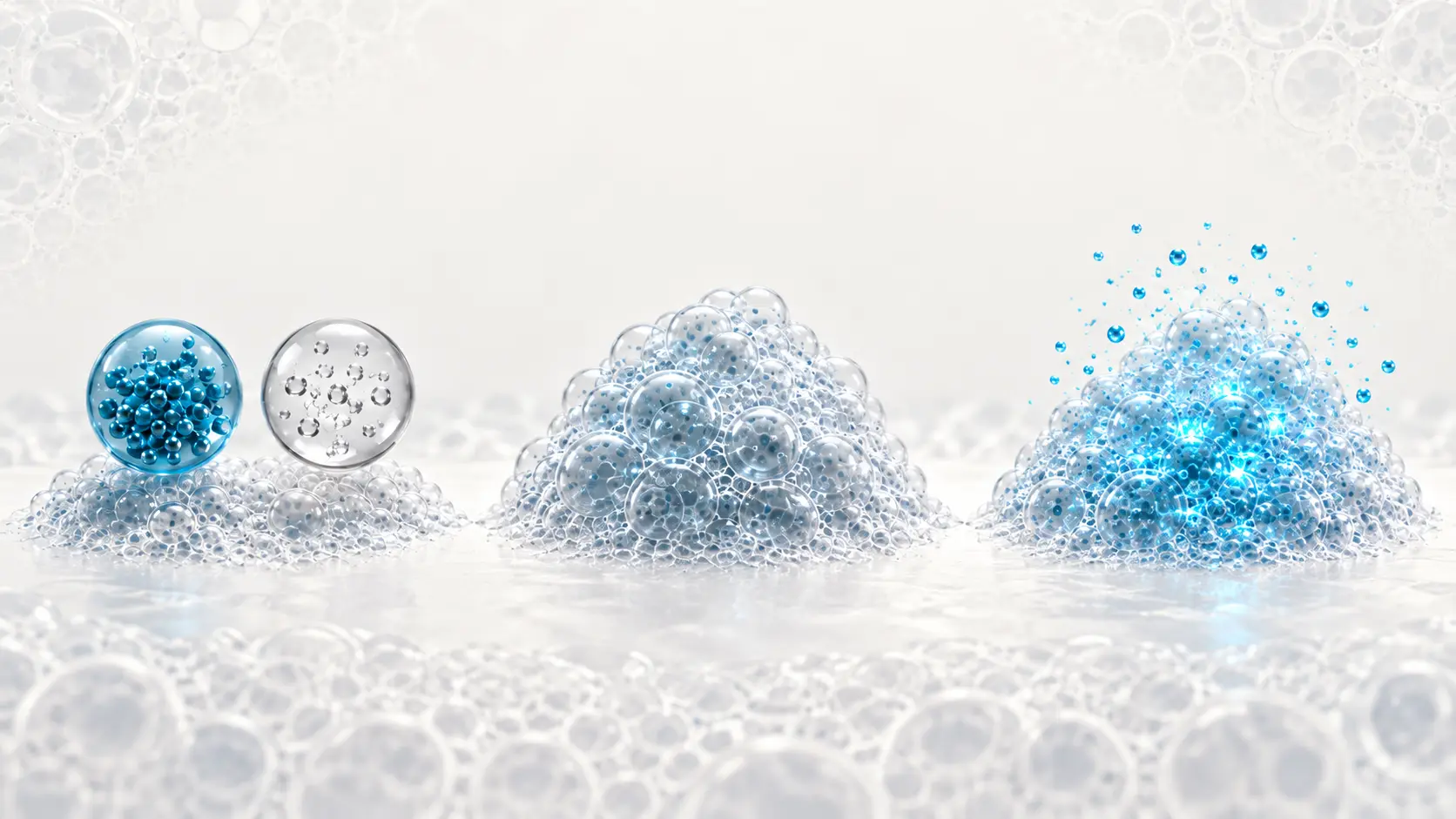
Components are stored apart before application.
The components meet to form a topical foam.
Nitric oxide is generated at the point of care.
Point-of-care generation
The topical format is being developed to conform to the application area and generate nitric oxide locally. Exact dosing, concentration, and treatment parameters remain program-specific.
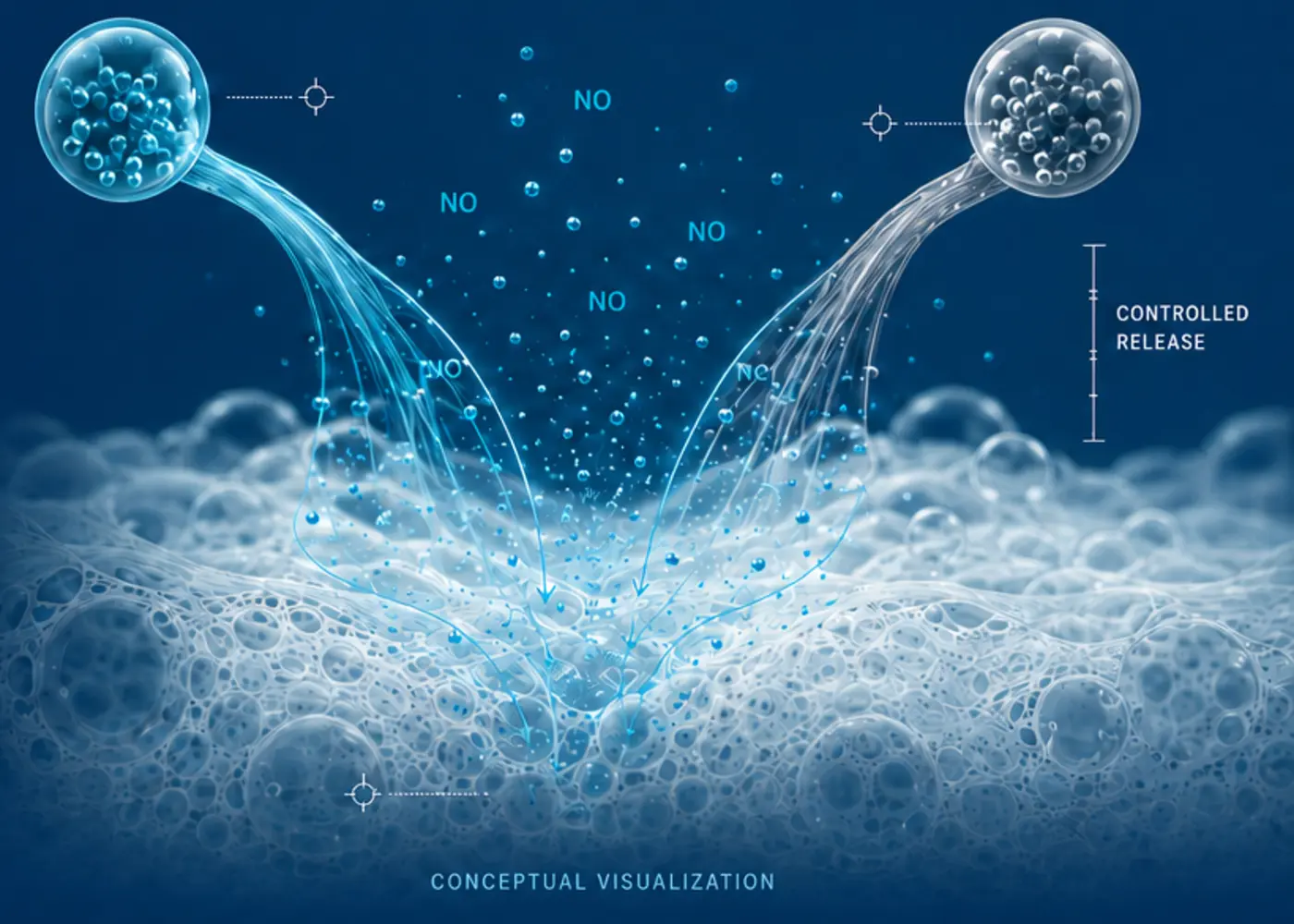 Conceptual visualization—not clinical proof
Continuous mode of action
The 2024 review by Bell, Miller, and Sullivan describes nitric oxide across blood flow and signaling, inflammation and immune response, microbial burden, and tissue repair.
01
Nitric oxide is an established signaling molecule involved in vascular tone and local blood flow.
02
Published literature describes NO-dependent signaling across inflammatory and immune pathways.
03
Laboratory research evaluates NO-generating foam in antimicrobial and biofilm models.
04
The scientific framework examines cellular activity, matrix turnover, and repair processes.